Free Guide · 18 Min Read
Content Creation
for Athletes
How to document your athletic journey without it killing your training. Filming tips, editing workflows, and growing an audience as an athlete-creator.
Why Document Your Journey.
You're already doing the hard part: training, racing, pushing your limits. Creating content around that journey is one of the highest-leverage things you can do. Not for vanity metrics. For connection, opportunity, and legacy.
When I started documenting my Ironman training, I expected maybe my friends to watch. Instead, I connected with thousands of people on the same path. I got asked to collaborate with brands. I built an audience that now supports my app, InstaCal. And most importantly, I have a library of memories from the most transformative period of my life.
The barrier to entry has never been lower. A phone, a free editing app, and 30 minutes a week. That's it. You're not competing with production studios. You're competing for attention with authenticity. And athletes have an unfair advantage: our content is inherently interesting. Suffering, triumph, transformation. These are the stories people are drawn to.
Filming While Training.
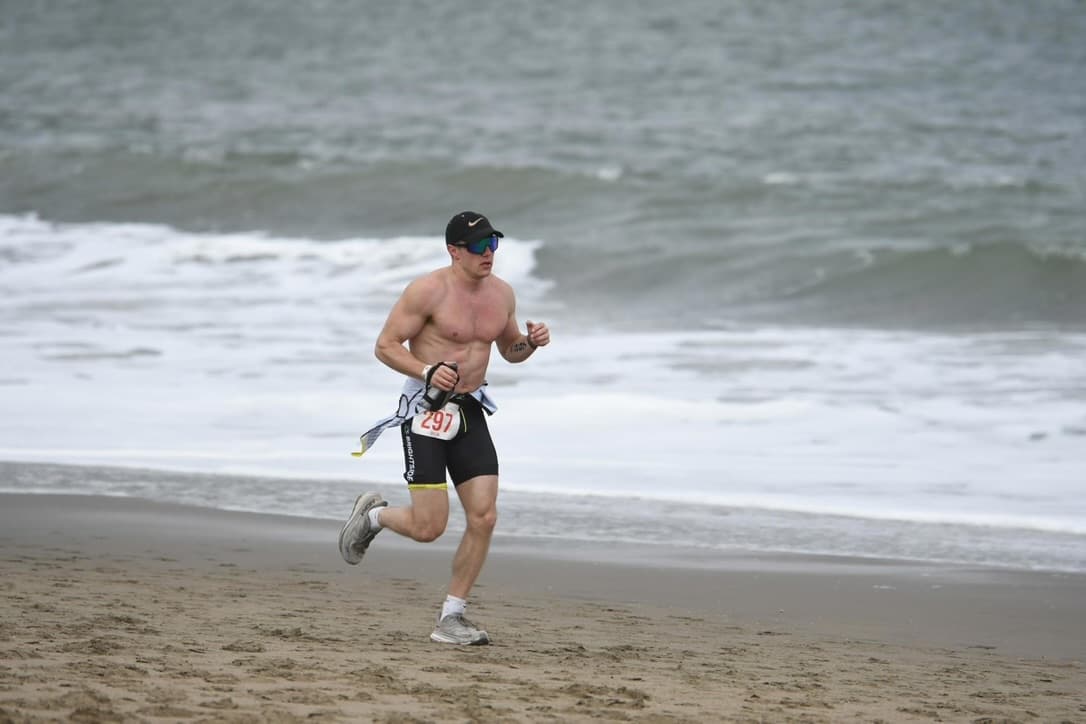
Content Meets Racing
The number one rule: training comes first, content comes second. If filming disrupts your workout quality, you're doing it wrong. The goal is to capture your training, not to train for the camera.
Phone vs. GoPro
Phone (iPhone/Android)
Best for: talking to camera, lifestyle shots, transitions
Higher video quality, better microphone, easier editing on-device. Use a phone mount on your bike handlebars or a running armband. The latest iPhones shoot cinematic video that looks professional with zero effort.
GoPro / Action Camera
Best for: POV shots, water, rough conditions
Waterproof, ultra-wide angle, built for motion. Mount on your helmet for bike POV, chest mount for running, or hold it for swim footage. Video quality is slightly lower than phone but the versatility is unmatched.
Phone + GoPro Combo
Best for: race day coverage
Use GoPro for action shots during the actual workout and phone for pre/post workout talking head clips. This gives you the best of both worlds without either device being perfect for everything.
Phone Mount Tips
For bike filming, a handlebar phone mount ($15-25) gives you stable POV footage and lets you record time-lapses of long rides. For running, a magnetic chest mount or asking a friend to film 30 seconds works great. For the gym, a small tripod ($20) propped against a wall captures your sets without needing someone to hold the camera.
Pro Tip
Editing Workflow.
Editing is where most athlete-creators get stuck. They film great footage then sit on it for weeks because editing feels overwhelming. The fix: develop a system and stick to it.
The Tools
CapCut (Free)
The best free editing app for short-form content. Auto-captions, trending templates, effects library. 90% of my Reels are edited in CapCut on my phone.
Adobe Premiere Rush (Free/Paid)
More powerful than CapCut, syncs across devices. Good if you want to start on your phone and finish on desktop.
Final Cut Pro / Premiere Pro
Desktop editing for longer-form content or YouTube videos. Overkill for Reels and TikToks but essential if you're doing YouTube.
Canva (Free/Paid)
Thumbnails, story templates, and static graphics. Not a video editor but essential for the visual brand surrounding your content.
The 30-Minute Edit
A polished 30-60 second Reel should take you no more than 30 minutes to edit once you have a system. Here's the workflow: (1) Select your best 5-8 clips. (2) Drop them on the timeline. (3) Trim to the beat of your audio. (4) Add auto-captions. (5) Add a hook text overlay in the first 2 seconds. (6) Export. Done. Don't over-edit. Authenticity beats production value every time in the athlete space.
Pro Tip
Storytelling Frameworks.
Good content is not about fancy editing or expensive gear. It's about storytelling. Every piece of content you post should follow a structure, even a 15-second Reel.
The 3 Frameworks That Work
1. The Hook → Struggle → Triumph
Open with a bold statement or dramatic moment. Show the hard part: the suffering, the early mornings, the doubt. End with the payoff: the finish line, the PR, the breakthrough. This is the hero's journey compressed into 30 seconds. Works for race recaps, training montages, and milestone posts.
2. The “Day in the Life”
Walk your audience through a full training day or race day. 5 AM alarm, breakfast, workout, work, second session, recovery. People love seeing the behind-the-scenes reality. It makes them feel connected to your journey and inspired to start their own.
3. The Teach → Show → Inspire
Share a specific tip or lesson (teach), demonstrate it with footage from your training (show), and connect it to a bigger message (inspire). “Here's how I fuel for long rides” + bike footage + “small habits compound into big results.” Educational content builds authority and gets saved/shared more.
Pro Tip
What Performs Well.
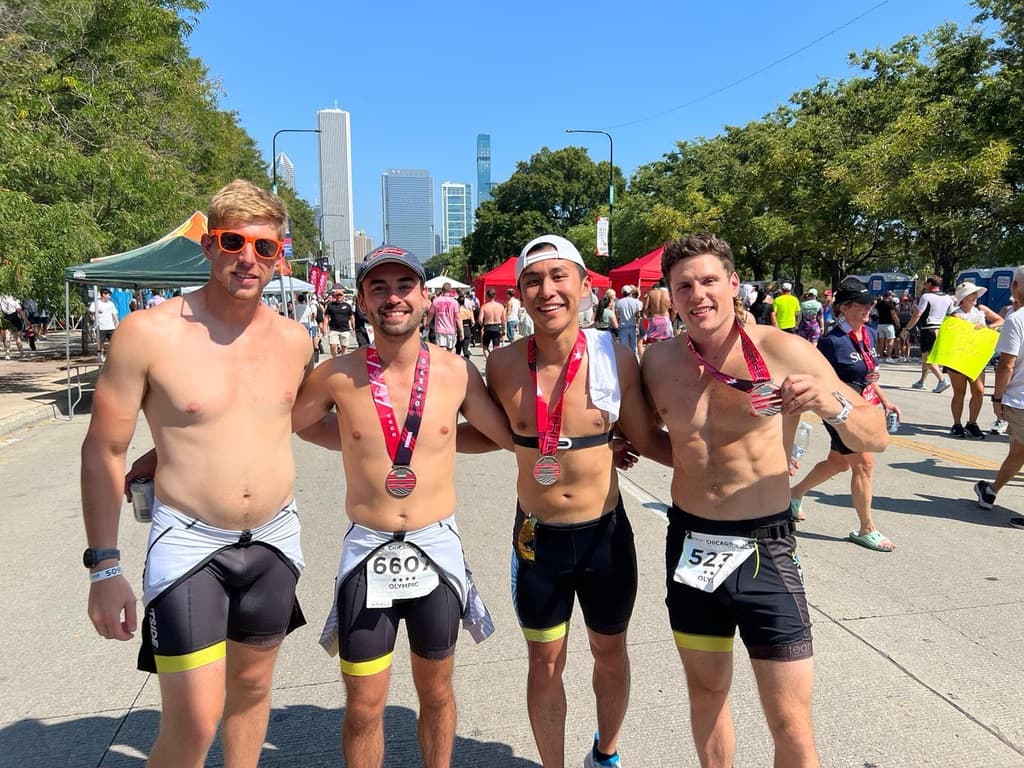
Community Content
After posting hundreds of pieces of content across Instagram, TikTok, and YouTube, here's what consistently outperforms everything else in the athlete niche:
Race day content
Nothing beats race day. The emotions, the atmosphere, the finish line. A race day Reel will outperform 10 training montages. Film EVERYTHING on race day: the morning, the start line nerves, the suffering, the finish. You can create weeks of content from one race.
Raw, emotional moments
The post-finish-line tears. The 5 AM alarm when you don't want to get up. The moment you question why you're doing this. Vulnerability performs. People are tired of highlight reels. Show the real struggle.
Training montages with good music
Clean cuts synced to a trending audio track. Swimming, biking, running. Show the volume. These are your bread and butter weekly posts. Keep them 15-30 seconds.
Before and after / transformation
Your first triathlon vs your latest. Month 1 of training vs month 6. People love progress stories. Keep a library of footage from early training for these comparisons.
Gear reviews and tips
"The nutrition that got me through 100 miles." "My entire Ironman gear list." Practical, useful content gets saved and shared. It also positions you as a knowledgeable voice in the space.
Lifestyle integration content
How you balance training with a job. What you eat in a day. Your morning routine. This broadens your audience beyond just athletes to anyone interested in discipline and optimization.
Instagram Reels vs TikTok.
Both platforms reward short-form video. But they have different algorithms, audiences, and content cultures. Here's how they compare for athlete-creators:
| Factor | Instagram Reels | TikTok |
|---|---|---|
| Discovery | Slower growth, loyal followers | Faster virality, broader reach |
| Audience | 25-45, fitness-focused, higher income | 16-35, entertainment-focused, diverse |
| Content Style | Polished, aspirational, aesthetic | Raw, funny, trend-driven, authentic |
| Brand Deals | Higher value per follower | Higher volume, lower per-deal value |
| Best For | Building authority, brand partnerships | Growing fast, testing content ideas |
My recommendation: post on both, but treat them differently. Use TikTok to test content ideas quickly. What gets views there will likely perform well on Reels too. But invest more polish into your Instagram content since that's where brands look first and where your long-term community lives.
Pro Tip
Best Times to Post.
Timing matters less than content quality, but it's still a factor. Here's what I've found works best for athletic content:
Early risers scrolling before work. Athletes check their feed during breakfast. Great for training content and motivational posts.
Lunch break scrolling. Good for tips, gear reviews, and educational content that people can save for later.
Post-work wind-down. Highest overall engagement window. Good for race recaps, emotional content, and lifestyle posts.
Weekend warriors checking in. Perfect for long session recaps, week-in-review content, and race announcements.
Check your Instagram Insights for when YOUR specific audience is most active. The general windows above are starting points, but your data will tell you the real answer.
Pro Tip
Content + Training Balance.
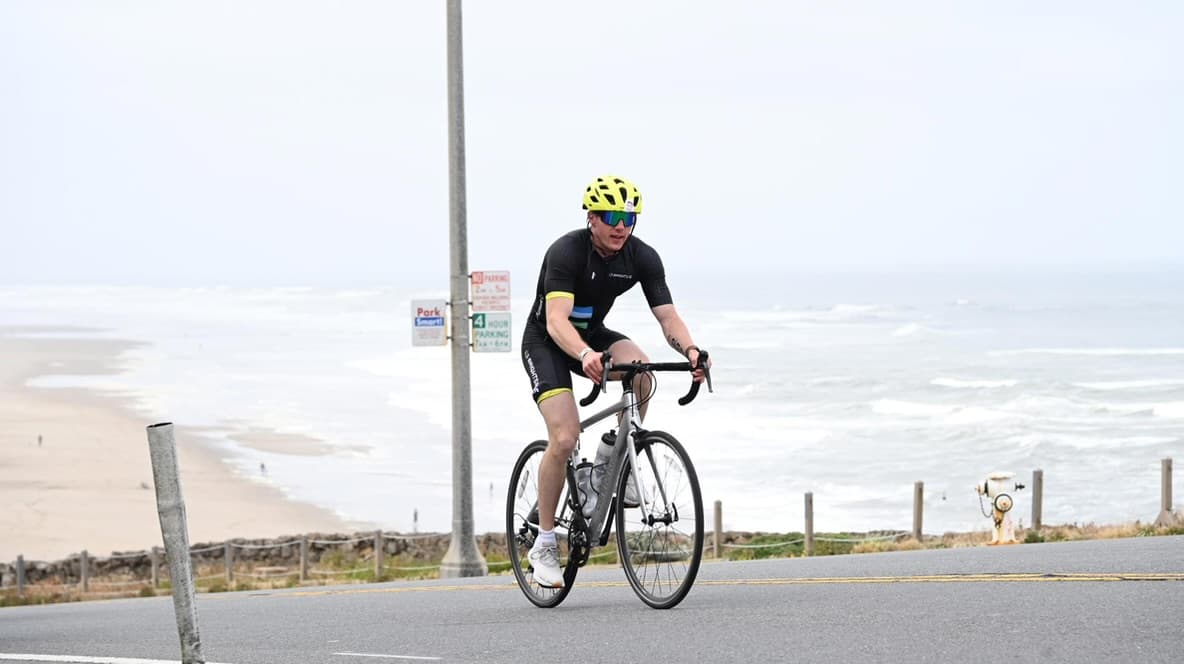
Content That Writes Itself
This is the hardest part. You're already training 10-15 hours a week. Adding content creation on top of that feels impossible. But it doesn't have to consume hours of your week. Here's how to keep it sustainable:
Capture during, create after. Don't think about editing during your workout. Just hit record at key moments. Set up the phone before your set, click record during your run, get 30 seconds of bike footage. Do the creative work later in a batch.
One content day per week. Pick one day (I use Sunday evenings) to edit and schedule all your content for the week. Film throughout the week, edit on Sunday, schedule posts for the next 7 days. Total time: 1-2 hours.
Quality over quantity. Three great posts per week beats seven mediocre ones. The algorithm rewards engagement rate, not post frequency. A viral Reel every few weeks is worth more than daily posts nobody watches.
Not every workout needs to be content. Some sessions are just for you. No camera, no phone, no documenting. Protect those moments. The content will be better because you had space to actually live the experience.
Pro Tip
Building an Authentic Brand.
Your brand is not a logo or a color palette. It's the feeling people get when they see your content. For athlete-creators, authenticity IS the brand. Here's what that means in practice:
Share the real story, not just the highlight reel. The 5 AM alarm is more relatable than the finish line photo. The failed workout is more interesting than the PR. People follow you for the journey, including the ugly parts. Show them.
Have a point of view. What do you believe about training, racing, and life that other people might disagree with? “You don't need a tri bike for your first Ironman.” “Alcohol has no place in serious training.” Opinions create conversation. Conversation creates community.
Be consistent in your voice. Whether your vibe is motivational, educational, funny, or raw, own it. Don't try to be someone you're not. The audience can smell inauthenticity instantly.
Engage with your community. Reply to every comment for the first year. DM people who share your content. Join conversations in your niche. Community is built one interaction at a time.
Pro Tip
Monetization Paths.
Let me be real: don't start creating content to make money. Start because you want to document and connect. But once you've built an engaged audience, there are legitimate monetization paths for athlete-creators:
Nutrition brands, gear companies, and athletic apparel are actively looking for athlete-creators. Start by tagging brands you use organically. Many will reach out once they see authentic content featuring their products. Rates: $100-500 per post at micro-influencer level.
Share affiliate links for gear, nutrition, and training tools you actually use. Amazon Associates, brand-specific affiliate programs, and platforms like LTK. Small per-sale commissions that add up. Be transparent. Always disclose affiliates.
Once you've proven results and built trust, offering coaching or custom training plans is a natural extension. Start with free advice content, then offer paid deep-dives.
Build something for your audience. I built InstaCal. You could create a training journal, a nutrition guide, merchandise, or a course. Your audience already trusts you, so give them something valuable to buy.
Race directors offer free entries, VIP access, and sometimes payment for athlete-creators who will cover their events. Great for getting free races and building event content.
Pro Tip
Dylan's Content Workflow.
Here's exactly how I manage content creation alongside Ironman training and a full-time software job. This is the system, not the theory.
Film 2-3 workouts per week
Monday swim, Wednesday run, Saturday long ride. I set my phone up before the session and hit record at key moments. Total filming time: maybe 5 minutes of actual recording per workout.
Voice memo after every workout
30-60 seconds of stream of consciousness. How I feel, what happened, any insights. These become captions and voiceovers. I have hundreds of these in my Notes app.
Sunday evening edit session (1.5 hours)
I batch-edit 3-4 Reels/TikToks for the week. CapCut on my phone, trending audio, auto-captions. I schedule them using Instagram's built-in scheduler and TikTok's post scheduler.
Post schedule: Mon/Wed/Fri + Stories daily
Three Reels per week is my baseline. Stories are low-effort daily updates: a training screenshot, a meal photo, a quick thought. Stories take 30 seconds each.
Engage for 10 minutes after posting
Reply to every comment within the first hour. Check DMs. Like and comment on 5-10 posts from people in my niche. This boosts algorithmic distribution and builds real relationships.
Race days = content gold mines
I film everything on race day. Give my GoPro to friends at different points on the course. Set up a tripod at the finish. One race produces 2-3 weeks of content. The race recap Reel alone is usually my highest-performing post of the month.
Total weekly time spent on content: about 3-4 hours including filming, editing, posting, and engaging. That's it. It's manageable alongside training and a full-time job because I have a system. Build your system and content stops being a burden and becomes a natural extension of what you're already doing.
That's The Guide
Now Go Create.
If this guide helped you, share it with an athlete who's been thinking about starting content. Follow along as I document the road to Ironman California 2026.
Built by an Athlete-Creator
Download InstaCal
The AI-powered calorie tracker I built while training for Ironman and creating content. Proof that the athlete-creator path works.
Get InstaCal