Free Guide · 25 Min Read
Ironman
Training Guide
Your complete guide to finishing your first Ironman. From someone who works a 9-5, built an app, and still crossed the finish line.
What is an Ironman?
An Ironman triathlon is the single hardest single-day endurance event most humans will ever attempt. It consists of three consecutive disciplines, completed back to back with no rest:
2.4
miles
Swim
112
miles
Bike
26.2
miles
Run
That's 140.6 miles in total. You have 17 hours from the moment the cannon goes off to cross that finish line. Most people finish between 12 and 16 hours. The swim takes place in open water: a lake, ocean, or river. The bike course covers 112 miles of road. And then you run a full marathon. After already swimming and biking for 8-10 hours.
It sounds impossible. It's not. But it does require serious preparation, dedication, and a willingness to suffer. That's what this guide is for.
Can You Do It?
Yes. Full stop. If you're reading this, you can finish an Ironman.
I'm not a professional athlete. I work a full-time 9-5 as a software developer. I built and launched an app (InstaCal) during my training. I create content on the side. I still found time to train for and finish Ironman Wisconsin.
The people on the Ironman course are not all chiseled superhumans. They're teachers, accountants, nurses, parents, first-timers, and people who just decided one day that they wanted to see what they were made of. The youngest racers are 18. The oldest finishers are in their 80s. There are people of every body type, every speed, and every background.
The Ironman is not about being fast. It's about being relentless. If you can commit to the training, stay consistent, and refuse to quit on race day, you will become an Ironman.
Pro Tip
How Long to Train
For your first Ironman, plan for a minimum of 6-9 months of dedicated training. If you're new to triathlon or don't have a strong endurance base, 12 months is ideal.
Here's a rough breakdown of training phases:
Build aerobic fitness. Long, easy efforts. Get comfortable in all three disciplines. 8-10 hours/week.
Increase volume and introduce intensity. Longer long rides, open water swims, and brick workouts. 10-14 hours/week.
Highest training volume. Race simulation workouts. Practice nutrition strategy. 14-18 hours/week at peak weeks.
Reduce volume by 40-60%. Maintain intensity. Rest your body while keeping fitness sharp. 6-8 hours/week.
Pro Tip
The Training Plan Overview
At peak training, expect to spend 12-15 hours per week swimming, biking, and running. Some weeks will be higher, some lower. Here's what a typical peak training week looks like:
| Day | Workout | Duration |
|---|---|---|
| Monday | Swim (technique + endurance) | 1 hr |
| Tuesday | Bike (intervals) + Short Run | 2 hrs |
| Wednesday | Run (tempo or speed work) | 1 hr |
| Thursday | Swim + Bike (easy effort) | 2 hrs |
| Friday | Rest or easy swim | 0-45 min |
| Saturday | Long Bike + Brick Run | 4-6 hrs |
| Sunday | Long Run | 2-3 hrs |
Brick workouts are one of the most important types of training for Ironman. A “brick” means doing two disciplines back to back, typically a bike ride followed immediately by a run. This trains your body to run on tired legs, which is exactly what race day demands. Your legs will feel like concrete blocks the first time. That's normal. It gets better.
Pro Tip
Swim Training
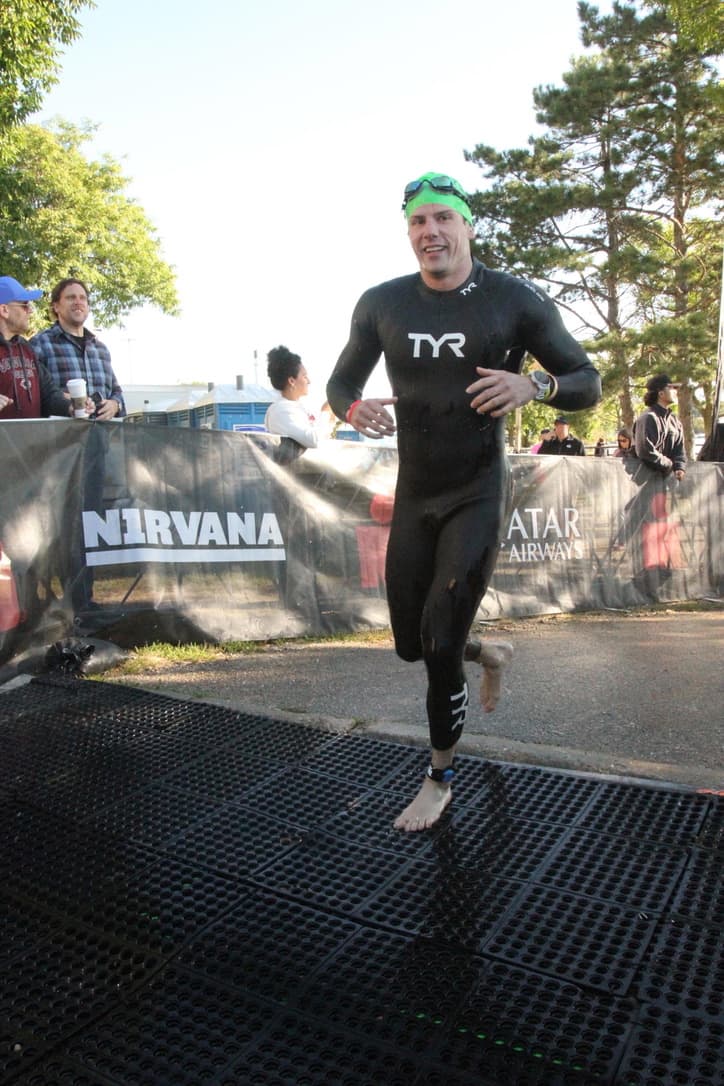
Swim Exit: Ironman Wisconsin
The swim is 2.4 miles and it's usually the discipline that terrifies first-timers the most. The good news: the swim is the shortest part of your day (typically 1-1.5 hours), and it's very trainable even if you're starting from scratch.
Open Water vs. Pool
Train in the pool for technique and fitness, but you MUST get open water practice before race day. Swimming in a lake is nothing like swimming in a pool. There are no lane lines, no walls to push off, no black line on the bottom. You'll be surrounded by hundreds of other swimmers. The water may be choppy, cold, and dark.
Sighting
Sighting means lifting your head while swimming to see where you're going. In a pool, you just follow the lane. In open water, you need to pick a landmark, like a buoy, a building, or a tree on shore, and sight every 6-10 strokes to swim straight. Bad sighting can add hundreds of extra meters to your swim. Practice this in the pool by swimming with your eyes closed and checking your drift.
Drafting
Drafting is legal in the swim (unlike the bike). Swimming directly behind or slightly to the side of another swimmer reduces the effort by up to 20-25%. Find someone swimming your pace or slightly faster and tuck in behind their feet. It's free speed.
Wetsuit Advice
Most Ironman races are wetsuit-legal (water temp below 76.1F). A wetsuit adds buoyancy and makes you faster even if you're a weak swimmer. Rent one first to find the right fit before buying. Practice swimming in your wetsuit at least 5-6 times before race day. The restricted shoulder movement takes getting used to.
Pro Tip
Bike Training
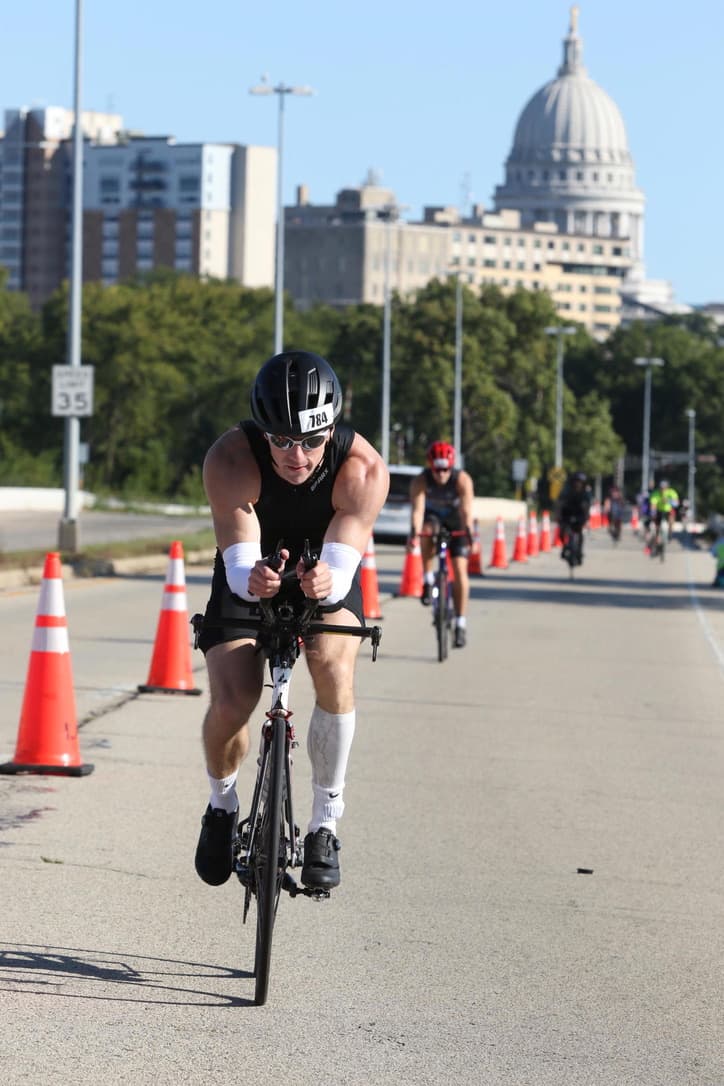
Bike Leg: Ironman Wisconsin
The bike is the longest portion of your race (112 miles, typically 5-7 hours) and arguably the most important. A great bike leg sets you up for a strong marathon. A bad one destroys your run before it starts.
Long Rides Are Non-Negotiable
You need to spend time in the saddle. There is no shortcut. Build up to rides of 80, 90, 100, and eventually 112 miles during your peak training. These rides teach your body to burn fat efficiently, build muscular endurance, and, critically, teach you how to eat and drink on the bike.
Nutrition on the Bike
You need to take in 250-350 calories per hour on the bike. This is your fueling window. If you under-eat on the bike, your marathon will be a death march. Practice your nutrition on every long ride. Figure out what your stomach can tolerate at race pace: gels, bars, sports drink, real food. Don't try anything new on race day.
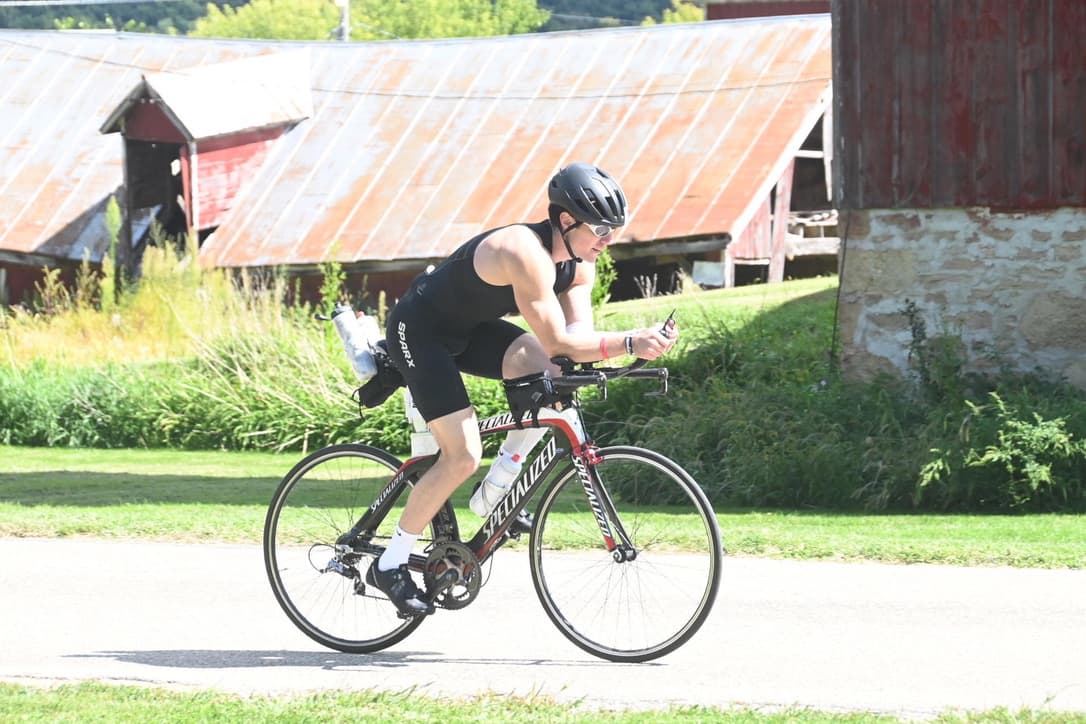
Mile 80: The Verona Loop
Aero Position
If you have aero bars (clip-on or tri bike), spend time riding in the aero position. It's significantly faster due to reduced wind resistance, but it uses different muscles and can be uncomfortable. Build up gradually. You don't need to be aero the entire 112 miles, but spending 60-70% of the ride aero will save you 30-60 minutes compared to riding upright.
Equipment Basics
You do NOT need a $10,000 tri bike for your first Ironman. A road bike with clip-on aero bars is perfectly fine. Make sure it fits you properly. Get a professional bike fit. A bad fit over 112 miles will wreck your back, neck, and knees. Other essentials: flat repair kit, spare tube, CO2 inflator, and cycling shoes if you use clipless pedals.
Pro Tip
Run Training
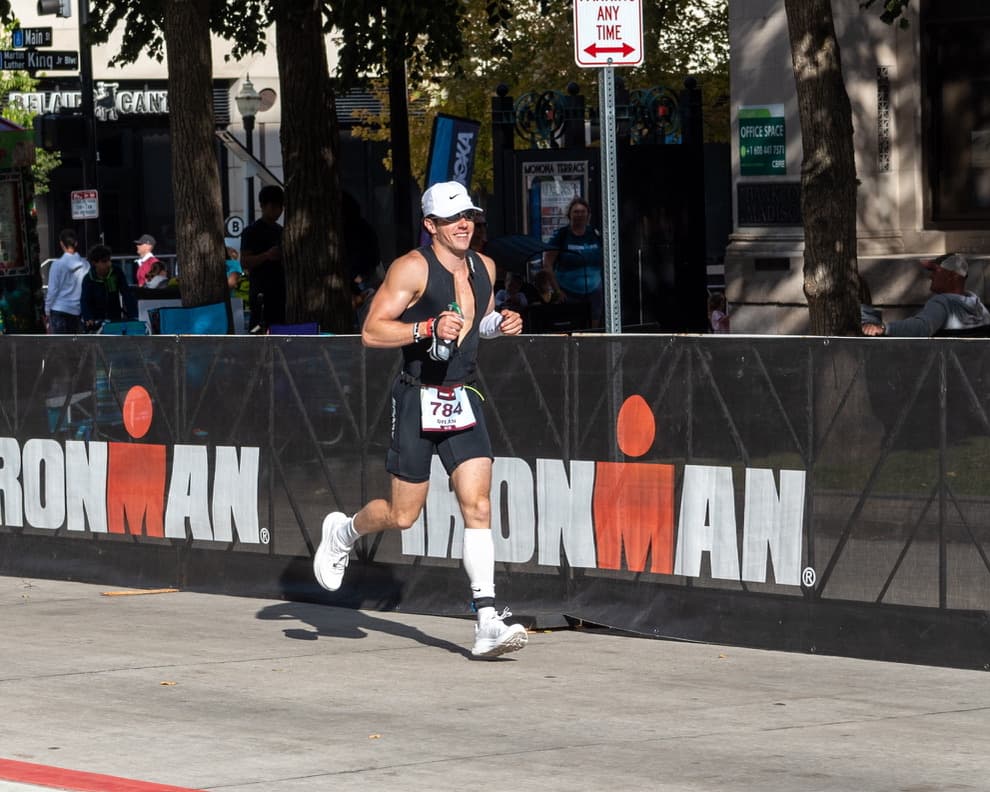
The Marathon: Mile 18
The Ironman marathon is nothing like a standalone marathon. You're running 26.2 miles after already swimming 2.4 miles and biking 112. Your legs are trashed. Your glycogen is depleted. Your mind is fragile. This is where the race truly begins.
Brick Runs
The single most important type of run training for Ironman is the brick run, running immediately after a long bike ride. The first mile off the bike feels absolutely terrible. Your legs feel like they belong to someone else. That sensation never fully goes away, but brick training teaches your body to transition and find a rhythm faster.
Start with 15-20 minute brick runs after your long rides and build up to 45-60 minutes by peak training. These don't need to be fast. Just get your legs moving off the bike.
Pacing Strategy
Your Ironman marathon pace will be 60-90 seconds per mile slower than your standalone marathon pace. Accept this now. Start the run conservatively, slower than you think you need to. A good strategy is to run the first 6 miles at an easy, comfortable pace, then settle into your target pace from miles 6-20, and then give everything you have left for the final 10K.
The Marathon Wall
In a standalone marathon, the wall hits around mile 20. In an Ironman marathon, it can hit as early as mile 13-16. When it hits, your pace will slow. You might need to walk. That's okay. Almost every Ironman finisher walks at some point during the marathon. The key is to keep moving forward. Walk the aid stations, run between them. Even a 14-15 minute per mile walk/run pace will get you to the finish.
Pro Tip
Race Day Nutrition
Nutrition can make or break your Ironman. You will burn 8,000-10,000 calories during the race. You cannot replace all of them, but you need to take in enough to keep moving. Here is a practical nutrition plan:
Pre-Race (Morning)
Eat breakfast 3 hours before the start. Stick to foods you know and have practiced. A good pre-race meal: oatmeal with banana and peanut butter, a bagel with cream cheese, or rice with a little salt. Aim for 500-800 calories, mostly carbs. Sip water and electrolytes but don't chug.
During the Swim
You can't eat during the swim. Just focus on swimming. Have a gel or some calories ready in your transition bag to take immediately after you exit the water.
During the Bike (The Fueling Window)
This is where you do the heavy lifting on nutrition. Target 250-350 calories per hour on the bike. Set a timer on your watch to remind you to eat every 20-30 minutes. Alternate between sports drink, gels, bars, and whatever real food you've trained with.
Electrolytes are critical. You're sweating for 10+ hours. Sodium, potassium, and magnesium need to be replaced. Use electrolyte tabs, salt capsules, or electrolyte drink mix. If you start cramping, you're already behind on electrolytes.
During the Run
Your stomach will be more sensitive during the run. Drop your intake to 150-250 calories per hour. Use gels, cola (the caffeine and sugar are clutch late in the race), broth at aid stations, and whatever you can stomach. Many people switch to real food in the back half of the marathon: pretzels, boiled potatoes with salt, even cookies. If it has calories and you can keep it down, eat it.
Pro Tip
Gear Essentials
You don't need to spend $15,000 to do an Ironman. You DO need the right gear. Here's what you actually need vs. what's nice to have:
Wetsuit
Rent for your first race ($100-150). Buy if you know you're doing more triathlons. Budget: $200-500.
Bike
A road bike works fine. Add clip-on aero bars ($50-100). Get a professional bike fit ($150-250). Tri bikes are nice but NOT necessary.
Helmet
Any CPSC-certified helmet works. Aero helmets save time but a standard road helmet is fine for your first race.
Tri Suit
A one-piece or two-piece tri suit you wear for the entire race. Swim, bike, and run in it. No changing. Budget: $100-200.
Running Shoes
Shoes you've trained in extensively. Many athletes use elastic laces for faster transitions. Do NOT wear new shoes on race day.
Nutrition Belt / Bento Box
A bike bento box or top-tube bag for gels and bars. A run belt if you carry your own nutrition rather than relying on aid stations.
GPS Watch
Track your pace, heart rate, and nutrition reminders. Garmin and COROS are popular. Useful but not mandatory.
Flat Kit
Spare tube, tire levers, CO2 inflator or mini pump. Practice changing a flat before race day. A flat is not a DNF. It's a 5-minute delay.
Pro Tip
The Mental Game
An Ironman is 30% physical, 70% mental. Your body will be trained. Your fitness will be there. But at some point during the race, maybe mile 80 on the bike, maybe mile 16 of the marathon, you will want to quit. Every Ironman finisher has been there.
The Dark Places
There will be a period during the race where everything feels wrong. Your legs hurt. Your stomach is off. You're questioning every decision that led you to this moment. This is the dark place, and it's completely normal. It's temporary. I promise you it passes. Just keep moving.
During my Ironman, the dark place hit around mile 85 on the bike. The wind was brutal on the second loop, my stomach was turning, and I still had 55+ miles left including a full marathon. For about 30 minutes, I genuinely considered quitting. But I didn't stop pedaling. I ate something small. I got to the next aid station. And slowly, it passed.
How to Push Through
Break it into small pieces. Don't think about the finish line when you're at mile 70 on the bike. Think about getting to the next aid station. The next mile marker. The next song on your playlist. Shrink the race down to the next 10 minutes.
Have a mantra. Something short and powerful you repeat when things get hard. Mine was “one more mile.” Pick yours before race day and practice it during tough training sessions.
Think about your people. Think about who's waiting at the finish line. Think about the people who supported your training. Think about the version of yourself that signed up for this race and believed it was possible. Don't let them down.
Remember: pain is temporary. The suffering you feel at mile 20 of the marathon will be a distant memory by the time you cross the finish line. The finish line feeling lasts forever. The pain does not.
Pro Tip
Dylan's Race Day Tips
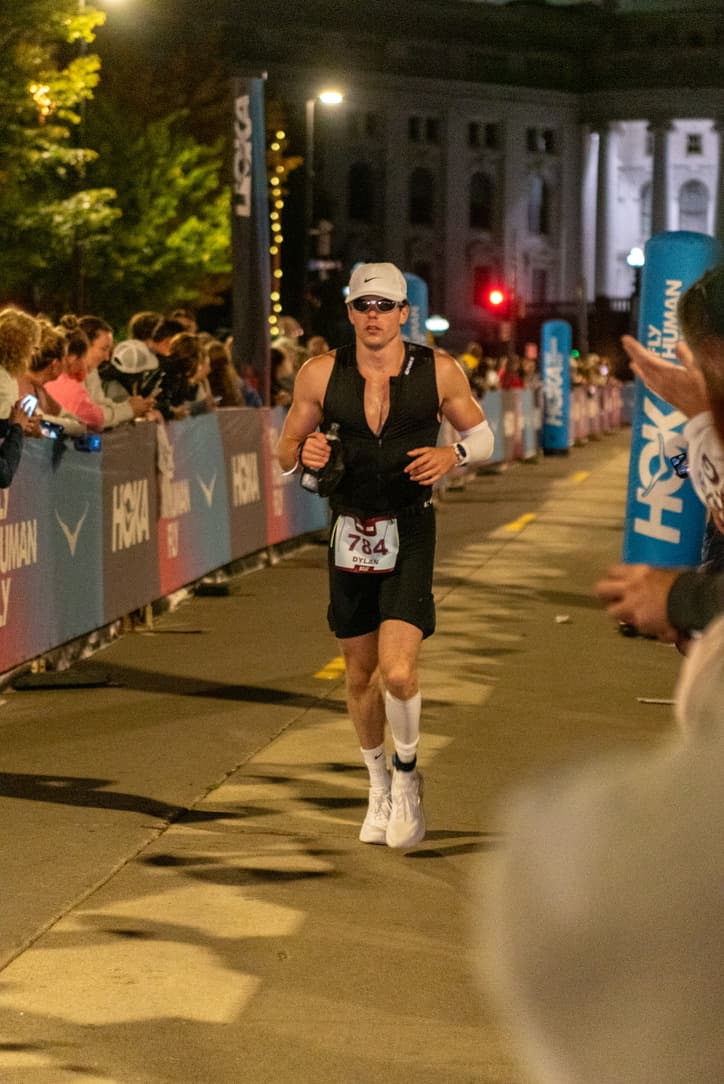
The Finish Line
These are the specific lessons I learned finishing Ironman Wisconsin. Not generic advice. These are things I wish someone had told me.
Rack your bike the day before and walk the transition area
Know exactly where your spot is, where the swim exit feeds into T1, where the bike out and bike in are, and where T2 starts. Race morning is chaos. Eliminate variables.
Wake up 3+ hours before the race start
Eat your pre-race meal, use the bathroom (multiple times), apply body glide, put on your wetsuit, and get to the swim start with time to spare. Rushing creates anxiety.
Body Glide everywhere
Neck (wetsuit rub), armpits, inner thighs, feet, and anywhere your tri suit seams sit. 13+ hours of movement will destroy any spot that chafes. Be generous with it.
Ride your own race on the bike
People will fly past you in the first 30 miles. Let them. You will catch many of them on the run when they've blown up from riding too hard. Discipline on the bike wins Ironman races.
Take in calories even when you don't want to
Around hour 8-10, your appetite will disappear. Eat anyway. Even if it's just sips of cola and a few pretzels. The moment you stop eating is the moment your race starts falling apart.
Walk the aid stations on the run
Take 30-60 seconds at each aid station to walk, drink, eat, and pour cold water on your head. These walking breaks preserve your legs and the time lost is minimal compared to the benefit.
Smile when the cameras are out
You're doing an Ironman. Even when it hurts, you're living a moment most people will never experience. The photos from race day are ones you'll look at for the rest of your life. Smile in them.
The last mile is the best mile of your life
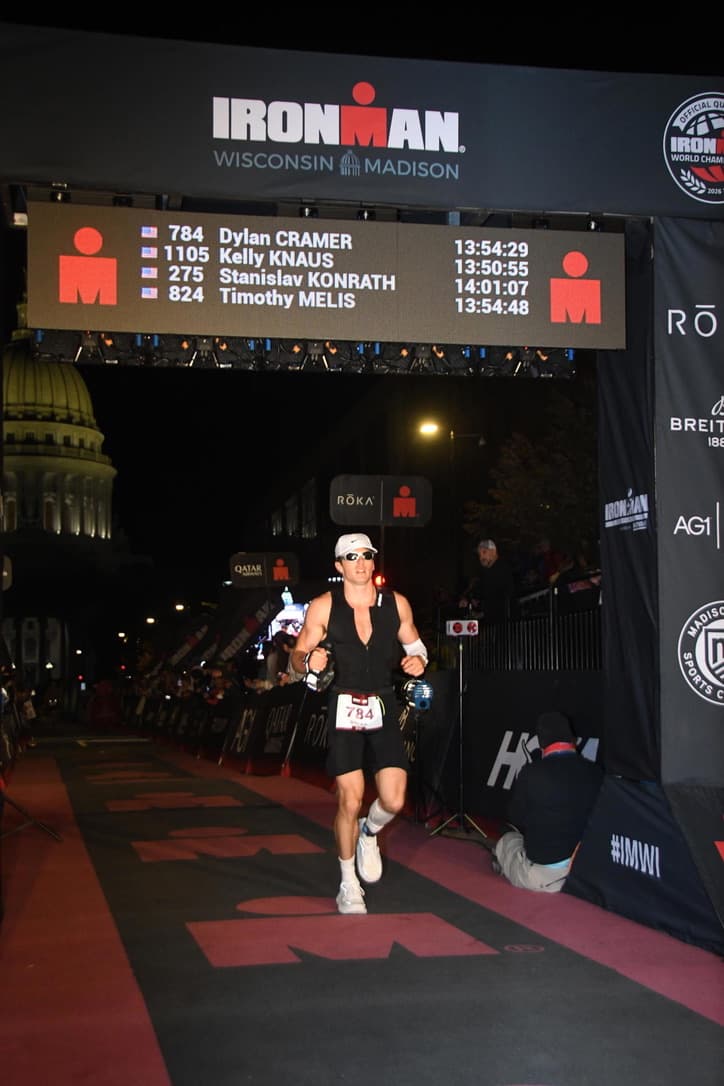
When you turn onto the finisher's chute and hear the crowd, when the announcer calls your name and says those words, "YOU ARE AN IRONMAN," nothing else matters. Every early morning, every long ride, every hard run leads to that moment. Soak it in.
That's The Guide
Now Go Become an Ironman.
If this guide helped you, share it with someone who needs it. Follow along as I train for Ironman California 2026.
Track Your Nutrition
Download InstaCal
The AI-powered calorie tracker I built. Snap a photo of your food and get instant macro breakdowns. Perfect for dialing in your race nutrition.
Get InstaCal