Free Guide · 22 Min Read
Race Day
Nutrition Strategy
How to fuel any endurance race without bonking, cramping, or destroying your stomach. Includes my exact nutrition plans from Ironman Wisconsin and Tunnel Hill 100.
Why Nutrition Matters.
In any endurance race lasting more than 90 minutes, nutrition is the fourth discipline. You can have perfect fitness, flawless pacing, and bulletproof mental toughness, but if your nutrition falls apart, your race falls apart. It's that simple.
Your body stores roughly 1,500-2,000 calories of glycogen in your muscles and liver. During hard exercise, you burn 600-1,000 calories per hour. That means your stored fuel runs out in 2-3 hours. After that, if you're not replacing calories, you bonk, a catastrophic loss of energy where your pace drops 30-50% and your brain stops cooperating.
During an Ironman, you burn 8,000-10,000 calories. During a 100- mile ultra, 10,000-12,000+. You can't replace all of it because your gut can only absorb so much. But the difference between a well-fueled race and a poorly-fueled one is the difference between crossing the finish line strong or crawling across it, or not finishing at all.
2,000
cal
Stored Glycogen
800+
cal/hr
Burn Rate
60-90
g/hr
Max Absorption
Calories Per Hour by Sport
How much you need to take in depends on the sport, intensity, and duration. Here are practical targets based on what your gut can actually absorb (not what you burn, since you'll always run a calorie deficit in a long race):
| Sport | Cal/Hour | Carbs/Hour | Notes |
|---|---|---|---|
| Swimming | 0 | 0g | Can't eat while swimming. Fuel before and immediately after. |
| Cycling | 250-350 | 60-90g | Easiest time to eat. Stable position, lower GI distress. |
| Running (Marathon) | 150-250 | 30-60g | Stomach is sensitive from impact. Mostly gels and liquids. |
| Ultramarathon | 200-300 | 40-80g | Lower intensity allows more solid food. Variety prevents palate fatigue. |
| Ironman Run | 150-200 | 30-50g | Gut is most stressed. Cola, broth, and pretzels are lifesavers. |
Pro Tip
Carb Loading Week
Carb loading is not “eat a giant pasta dinner the night before.” Real carb loading is a 2-3 day process that tops off your glycogen stores. Done correctly, it can increase your stored glycogen by 20-40%, giving you a meaningful buffer on race day.
The Protocol
Starting 3 days before your race, increase your carbohydrate intake to 8-12 grams of carbs per kilogram of body weight per day. For a 70kg (154lb) athlete, that's 560-840 grams of carbs daily. This is a LOT of carbs. You will feel bloated. That's normal. Glycogen binds with water, so you'll gain 2-4 pounds of water weight. This is a good thing. That water helps with hydration on race day.
What to Eat
Focus on easily digestible, low-fiber carbohydrates. This is not the time for whole grains and vegetables. You want white rice, pasta, bread, bagels, pancakes, juice, sports drink, pretzels, and potatoes. Reduce fat and fiber to make room for more carbs and to avoid GI issues. Keep protein moderate.
Common Mistakes
Starting too late. One big pasta dinner does almost nothing. Your muscles need 2-3 days to fully saturate with glycogen. Start early.
Eating too much fat. Alfredo sauce, butter, and cream-heavy meals fill you up without adding carbs. Stick to tomato-based sauces, plain rice, and simple carb-dense foods.
Trying new foods. Race week is not the time for the exotic restaurant near the race venue. Eat foods your stomach knows and trusts.
Pro Tip
Pre-Race Meal Timing
Your pre-race meal is the final piece of the fueling puzzle. Get it wrong and you'll spend the first hour of your race with a sloshing stomach or, worse, looking for a porta-potty.
Timing: 3 Hours Before Start
Eat your pre-race meal 3 hours before the race start. This gives your body time to digest and stabilize blood sugar. For a 7:00 AM race start, you're eating at 4:00 AM. Yes, it's early. Set an alarm, eat, and go back to sleep or start your morning routine.
What to Eat
Aim for 500-800 calories, mostly carbohydrates. Low fiber, low fat, moderate protein. Proven pre-race meals:
Easy to make in a hotel room with hot water.
Dense carbs, some protein and fat for sustained energy.
My go-to. Easy on the stomach, high carb.
Simple carbs. Skip the butter if fat bothers your stomach.
30 Minutes Before Start
Sip on a sports drink or take a gel with water 15-30 minutes before the gun goes off. This tops off blood sugar and gives you an immediate energy source for the first 30-45 minutes of racing, bridging the gap until you start your in-race nutrition plan.
Pro Tip
Fueling the Bike Leg
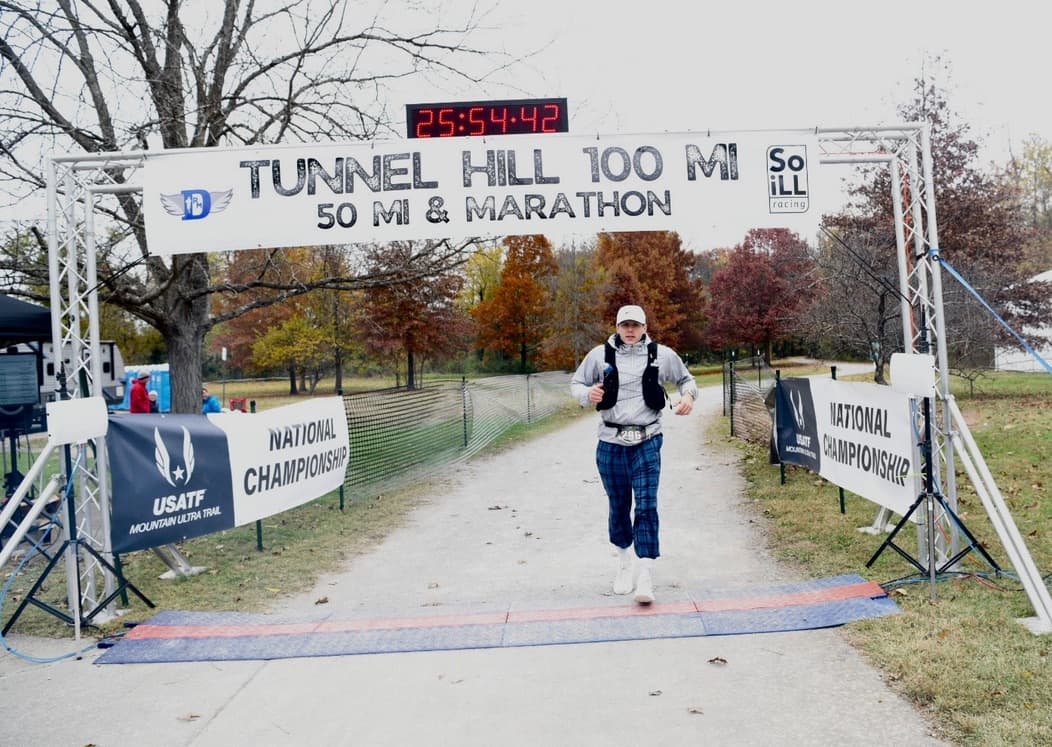
Fueled Right: Tunnel Hill 100 Finish
The bike is your golden fueling window. In a triathlon, the bike leg is where you do the heavy lifting on calories. Your body is in a stable, seated position. The intensity is lower than running. Your stomach tolerates food better on the bike than it ever will on the run. If you get your bike nutrition right, everything that follows becomes dramatically easier.
The Bike Nutrition Plan
Target 250-350 calories per hour from the moment you start riding. Set a timer on your bike computer to beep every 20 minutes as a reminder to eat or drink. Don't wait until you feel hungry. By then you're already 30-45 minutes behind on fueling.
Liquid vs. Solid Calories
In the first 2-3 hours of riding, your stomach can handle solid food: bars, chews, rice cakes, PB&J sandwiches. These provide sustained energy and psychological satisfaction. As the ride goes on and intensity increases, shift to liquid calories and gels which are easier to digest. By hour 4-5, most athletes are relying primarily on sports drink, gels, and simple sugars.
What I Carried on the Bike at Ironman Wisconsin
Aero bottle (between aero bars)
Filled with concentrated sports drink mix. ~400 calories total. Sipped continuously.
2x frame bottles
One with electrolyte drink, one with water. Refilled at aid stations every ~20 miles.
6x gels in bento box
Took one every 30-35 minutes starting at mile 15. Alternated between caffeinated and non-caffeinated.
2x bars in jersey pocket
Ate in the first 40 miles while stomach was fresh. Cut into pieces before the race for easy eating.
Salt capsules
One capsule every 45 minutes. Crucial on a warm day. Kept in a small bag taped to the top tube.
Pro Tip
Fueling the Run
Running nutrition is harder than cycling nutrition. The constant impact jostles your stomach, blood flow shifts away from digestion to your working muscles, and many foods that sat perfectly fine on the bike suddenly become intolerable.
Calorie Targets on the Run
Drop your intake to 150-250 calories per hour on the run. This is lower than the bike because your stomach can't handle as much and because you fueled heavily on the bike (if you followed the plan). Focus on simple, fast-digesting carbs: gels, sports drink, cola, and aid station food.
The Aid Station Strategy
Walk through every aid station. Seriously. The 15-30 seconds you lose walking is nothing compared to the benefit of being able to actually eat, drink, and keep things down. Trying to eat while running at pace is a recipe for choking, spilling, and GI distress. Walk, eat, drink, pour cold water on your head, then start running again.
What Works Late in a Race
After 8-10 hours of racing, your palate revolts against sweet gels. Everything tastes sickeningly sweet. This is when savory options save your race:
Cola (flat or fizzy)
Caffeine + sugar + familiar taste. The late-race lifesaver for almost every Ironman finisher.
Chicken broth
Warm, salty, easy on the stomach. Available at most Ironman aid stations after dark.
Pretzels with salt
Crunchy, salty, and easy to eat while walking. Sodium + carbs in one bite.
Boiled potatoes with salt
Calorie-dense, easy to digest, savory. A staple at ultra aid stations.
Watermelon
Hydrating, easy to stomach, natural sugars. Refreshing when everything else makes you gag.
Pro Tip
Electrolyte Strategy
Electrolytes are the minerals your body loses through sweat: primarily sodium, but also potassium, magnesium, and calcium. During a long race, you can lose 500-1,500mg of sodium per hour depending on your sweat rate and the heat. If you don't replace it, you cramp, your muscles stop firing efficiently, and in extreme cases you develop hyponatremia (dangerously low blood sodium).
How Much Sodium You Need
A safe starting point is 500-800mg of sodium per hour during racing. Heavy sweaters or racing in hot conditions may need 1,000mg+ per hour. You can dial this in by doing a sweat test (weigh yourself before and after a 1-hour hard effort) or by paying attention to salt stains on your kit after training. White, crusty stains = you're a salty sweater and need more sodium.
Sources of Electrolytes
Easy to dose precisely. Take with water every 30-45 min.
Combines hydration + electrolytes + calories. Convenient.
Some but usually not enough on their own. Supplement with other sources.
Good supplemental source at aid stations. Broth has ~800mg per cup.
Hydration Math: Sweat Rate
To calculate your sweat rate: weigh yourself before and after a 1-hour workout (with minimal clothing). Each pound lost equals roughly 16 oz of sweat. If you lose 2 lbs in an hour, your sweat rate is ~32 oz/hour. You should aim to replace 70-80% of that -- trying to replace 100% often causes sloshing and GI issues.
Pro Tip
Caffeine as Performance Tool
Caffeine is one of the most well-researched and effective legal performance enhancers in endurance sports. It reduces perceived effort, delays fatigue, increases fat oxidation, and improves focus, all of which matter enormously in a race lasting 5-17 hours.
How Much and When
The effective dose is 3-6mg per kg of body weight. For a 70kg athlete, that's 210-420mg total. You don't need to take it all at once. A smart strategy for an Ironman or ultra:
Coffee or caffeine pill. Gives you a boost for the start without jitters.
Caffeinated gel or cola. Maintains alertness during the long middle section.
Caffeinated gel. Provides a mental and physical lift for the hardest part of the race.
Cola or caffeinated gel. The late-race caffeine hit is a genuine lifeline when you're falling apart.
Caffeine Caveats
Caffeine is a diuretic at high doses, meaning it increases urine output. At the doses used in racing, this effect is minimal and offset by the fluid you're consuming. However, if you're sensitive to caffeine, test it extensively in training. Caffeine can cause GI distress, jitters, and elevated heart rate in sensitive individuals. Also, don't reduce your daily caffeine intake in the weeks before a race. Withdrawal headaches on race morning are brutal.
Pro Tip
Stomach Training
Here's something most people don't realize: your gut is trainable. Just like your legs adapt to running longer and your lungs adapt to harder efforts, your stomach adapts to processing food during exercise. Athletes who practice eating during training can absorb significantly more calories during racing than those who don't.
How to Train Your Gut
Eat during every long session. From week one of training, practice eating on the bike and during long runs. Even if you don't “need” calories for a 90-minute run, take a gel anyway. You're training your gut, not fueling for that specific session.
Gradually increase volume. Start with 30g of carbs per hour and build to 60-90g over several weeks. If your stomach protests at 60g/hr, stay there for 2-3 weeks before pushing higher. Forcing too much too soon causes GI distress and makes your gut less willing to cooperate next time.
Use race-day products. Train with the exact gels, drinks, and bars you plan to use on race day. Your gut adapts to specific formulations. Switching brands or flavors on race morning is asking for trouble.
Practice at race intensity. Eating during a Zone 2 easy ride is simple. Eating during a threshold effort is much harder because blood flow diverts from your gut to your muscles. Do some of your nutrition practice at race pace to simulate real conditions.
Pro Tip
When Nutrition Goes Wrong
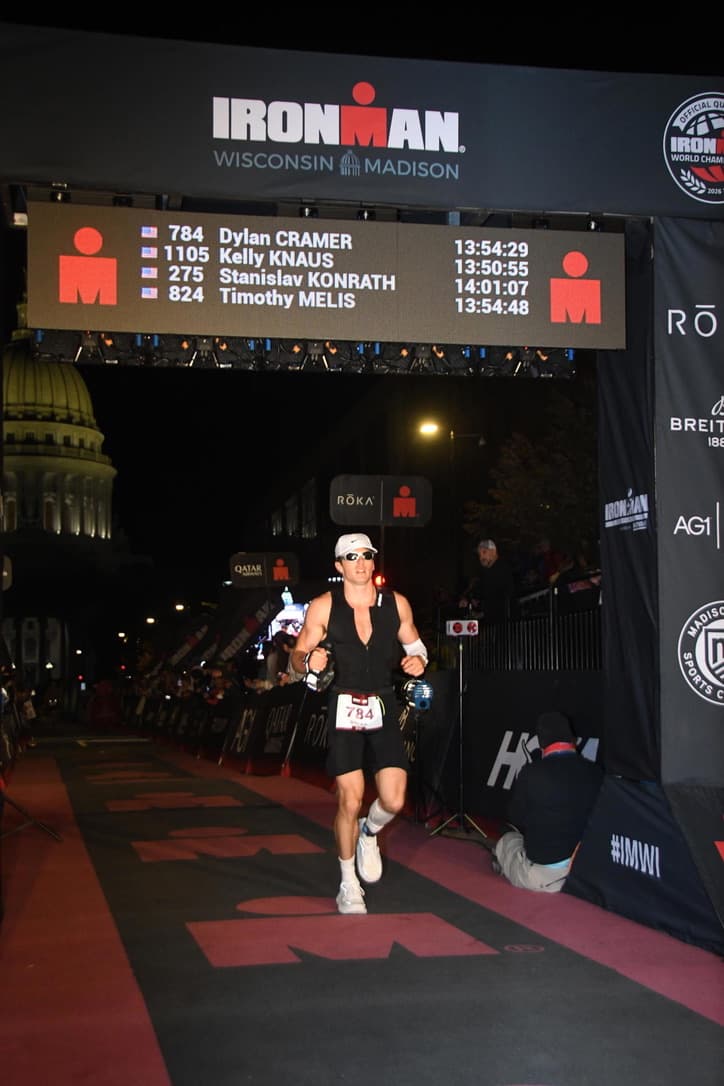
Made it Through: Ironman Wisconsin Finish
Even with perfect preparation, nutrition can go sideways mid-race. The heat spikes unexpectedly. An aid station runs out of your preferred product. Your stomach decides it's done cooperating at hour 9. Having a plan for when things go wrong is just as important as having a plan for when things go right.
GI Distress: Nausea and Bloating
If you feel nauseous or bloated, slow down and stop eating solid food. Switch to sipping water or diluted sports drink. Walk for 2-3 minutes. The nausea is usually caused by undigested food sitting in your stomach because blood has shifted away from digestion. Slowing down redirects blood to your gut and lets it catch up. Once the nausea passes (and it usually does in 10-15 minutes), resume eating with small amounts of liquid calories.
Bonking (Hitting the Wall)
If you bonk (sudden fatigue, dizziness, inability to maintain pace), your blood sugar has crashed. You need fast-acting sugar immediately. Cola, a gel with water, or any simple carbohydrate. It takes 10-15 minutes for ingested carbs to hit your bloodstream. Walk or easy spin while you wait. The bonk is recoverable if you act quickly. If you try to push through without eating, you will only get worse.
Cramping
Muscle cramps during racing are usually caused by a combination of fatigue, dehydration, and electrolyte depletion, not just one factor. If you start cramping, immediately take sodium (salt capsule, broth, or pickle juice if available), drink water, and slow your pace. Stretch gently if possible. Cramps that come on gradually can often be managed. Cramps that hit suddenly and severely may require walking until they release.
Pro Tip
Dylan's Exact Race Plans
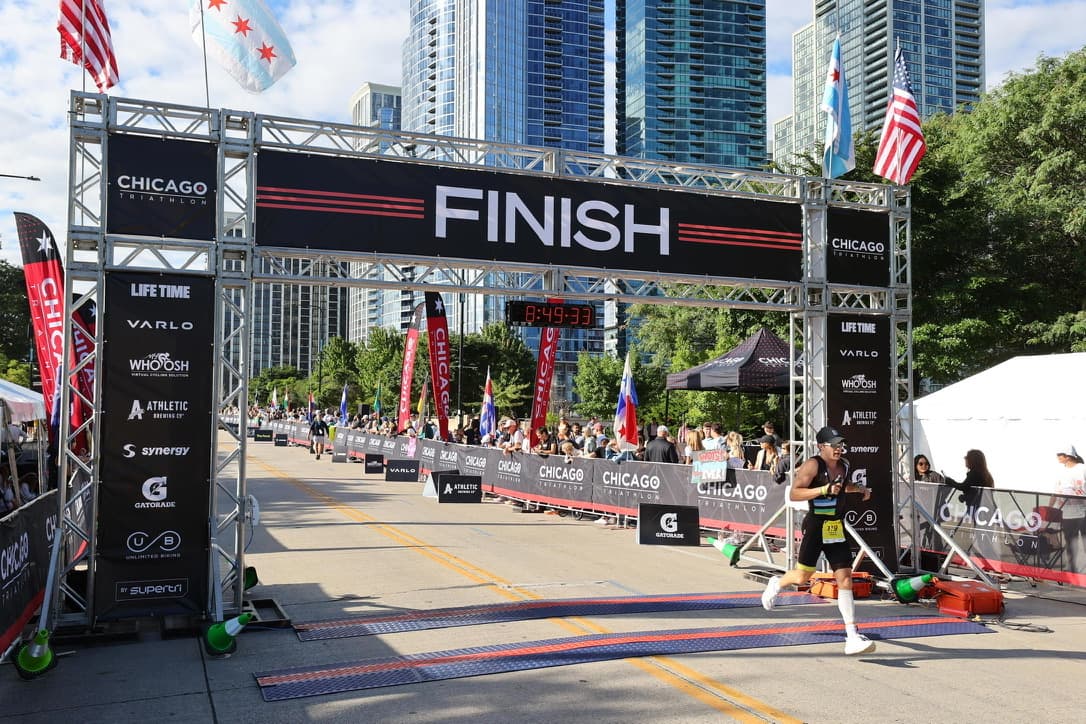
Fueled and Finished: Chicago Marathon
Here are the actual nutrition plans I used for two very different races. Not theoretical. These are what I ate, when I ate it, and how it worked.
Ironman Wisconsin
Pre-Race (4:00 AM)
2 cups white rice with scrambled eggs and soy sauce (~650 cal). 16oz water with electrolyte mix. Coffee (200mg caffeine).
Pre-Swim (6:30 AM)
1 gel + 8oz sports drink (~200 cal). Final bathroom stop.
Swim to T1 (7:00-8:15 AM)
Nothing during swim. Took a gel immediately exiting the water while running to my bike.
Bike Leg (8:20 AM - 2:00 PM)
~1,800 total calories over 5.5 hours. Concentrated drink mix in aero bottle (~400 cal), 6 gels (~600 cal), 2 bars (~500 cal), electrolyte drink (~300 cal). Salt capsule every 45 min. Refilled bottles at aid stations twice.
Run Leg (2:15 - 7:55 PM)
~1,000 total calories over 5.5 hours. Gels every 30-40 min for first 13 miles (~400 cal). Switched to cola and pretzels from mile 13-26 (~600 cal). Chicken broth at two aid stations. Salt capsule every 45 min.
Total race calories consumed: ~3,650. Total calories burned: ~9,500. That's a deficit of nearly 6,000 calories, which is normal. The stored glycogen from carb loading and body fat make up the difference.
Tunnel Hill 100 (100-Mile Ultramarathon)
Pre-Race (4:00 AM)
Oatmeal with peanut butter and banana (~600 cal). Coffee (200mg caffeine). 16oz water with electrolytes.
Miles 0-30 (Easy pace, stomach fresh)
Gels every 25-30 min. PB&J sandwich quarters at aid stations. Sports drink at every stop. ~300 cal/hr. Felt great.
Miles 30-60 (Fatigue building)
Mix of gels, boiled potatoes with salt, pretzels, and cola. Backed off to ~250 cal/hr as stomach sensitivity increased. Salt capsule every 40 min.
Miles 60-80 (The dark place)
Stomach nearly shut down around mile 65. Switched entirely to cola, broth, and small bites of potato. ~150-200 cal/hr. Walked aid stations for longer. Caffeine gels at miles 65 and 75.
Miles 80-100 (Survival mode)
Sipping cola and broth. Occasional pretzel or cookie when stomach allowed. ~150 cal/hr. Caffeine gel at mile 90. Crossed the finish line depleted but upright.
Pro Tip
Post-Race Recovery Nutrition
You just crossed the finish line. You're exhausted, emotional, and probably not hungry. But what you eat in the first 24 hours after your race has an enormous impact on how quickly your body recovers.
The First 30-60 Minutes
Your muscles are most receptive to glycogen replenishment immediately after exercise. Within 30-60 minutes of finishing, try to get in a mix of carbs and protein. A recovery shake, chocolate milk, or a simple meal like a turkey sandwich works. Aim for a 3:1 or 4:1 ratio of carbs to protein. If your stomach won't tolerate solid food (common after an Ironman), a liquid option is perfectly fine.
The First 24 Hours
Eat frequently and eat well. Your body is in repair mode. Focus on:
Carbohydrates
Replenish depleted glycogen stores. Rice, pasta, bread, fruit.
Protein
Repair muscle damage. Aim for 20-40g every 3-4 hours. Meat, eggs, dairy, protein shake.
Sodium & Electrolytes
Replace what you sweated out. Salty foods, electrolyte drinks. Your body may crave salt. Listen to it.
Water
Rehydrate. Drink to thirst. Monitor urine color, aiming for pale yellow within 24 hours.
Anti-inflammatory Foods
Berries, tart cherry juice, fatty fish, turmeric. Reduce the systemic inflammation from 10+ hours of exercise.
The Next Week
You will be ravenously hungry for 3-5 days after an Ironman or ultra. This is your body demanding fuel for repair. Eat. This is not the time to count calories or restrict. Your metabolism is elevated, your muscles are rebuilding, and your immune system is suppressed. Feed it quality food in generous quantities. Pizza, burgers, and ice cream are also acceptable. You earned it.
Pro Tip
That's The Guide
Now Go Fuel Your Race.
If this guide helped you, share it with someone who needs it. Follow along as I train for Ironman California 2026.
Track Your Nutrition
Download InstaCal
The AI-powered calorie tracker I built. Snap a photo of your food and get instant macro breakdowns. Perfect for dialing in your race day nutrition.
Get InstaCal