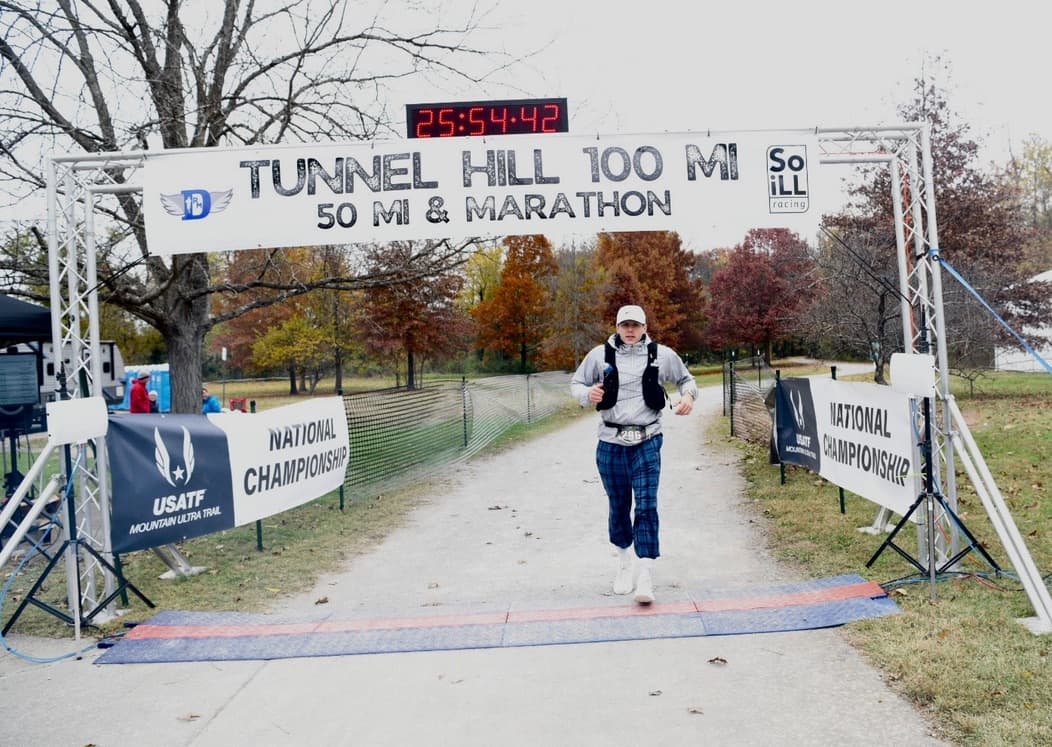
Free Guide · 20 Min Read
Ultra Marathon
Nutrition Guide
How to fuel for 50K, 50-mile, and 100-mile races. From someone who learned the hard way what works, and what sends you to the porta potty at mile 60.
Why Nutrition Matters in Ultras.
In a road marathon, you can get away with mediocre nutrition. You might bonk at mile 22, but you can white-knuckle your way to the finish on willpower alone. In an ultra marathon, nutrition IS the race. Your fitness gets you to the start line. Your fueling determines whether you finish.
During a 100-mile race, you'll burn somewhere between 10,000 and 15,000 calories. You can only absorb and use a fraction of that in real time. The gap between what you burn and what you can take in is what makes ultra nutrition so brutally important. Get it wrong and you'll be sitting in a chair at mile 65, unable to move, wondering where it all went sideways.
Get it right, and you'll be passing people at mile 80 who are faster than you but forgot to eat. I've seen it happen. I've been on both sides.
50K
3,500-5,000 cal
4-8 hrs
50 Mi
6,000-9,000 cal
8-14 hrs
100 Mi
10,000-15,000 cal
18-30+ hrs
Calories Per Hour: The Numbers
The general target for ultra marathon fueling is 200-350 calories per hour. But this is a range, not a rule. Your ideal number depends on pace, body size, temperature, terrain, and what your stomach can actually handle.
Similar to marathon fueling. Gels and sports drink work fine. You're moving fast enough that solid food can be hard to digest.
The sweet spot where you start needing real food. Your pace is slower, digestion works better, and you'll want variety. Mix gels with sandwiches, potatoes, and fruit.
Sustained eating over 20-30+ hours. Early miles can be gel-heavy, but by hour 12 you'll likely need real food. Listen to your body. Some hours you'll eat 350+ cals, others you'll struggle to get 150 down.
Here's the math that matters: if you're burning 600 calories per hour and absorbing 250, you're running a 350 calorie per hour deficit. Over 24 hours, that's an 8,400 calorie hole. Your body can pull from fat stores to cover some of this, but not all. Fall too far behind on calories and you'll hit a wall that no amount of mental toughness can push through.
Pro Tip
Stomach Training.
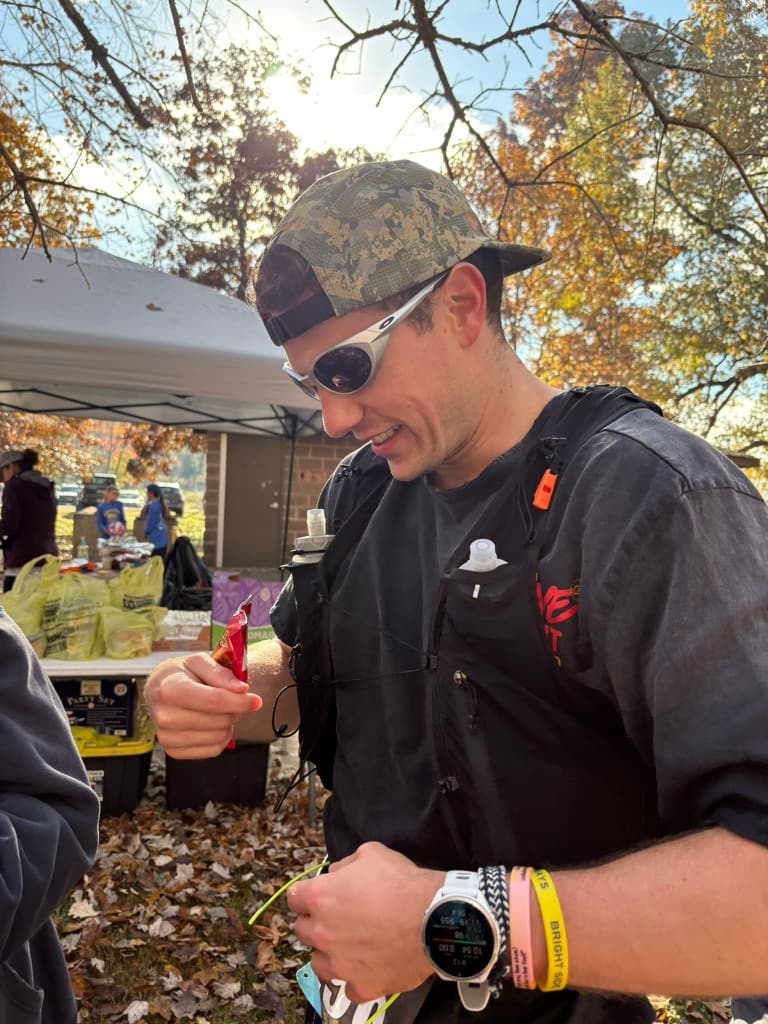
Fueling on the Move
Your stomach is a muscle that needs to be trained just like your legs. If you never practice eating while running, your race day nutrition plan is worthless because your gut will reject everything you put in it.
GI distress is the number one reason people DNF ultras. Not injury. Not fitness. Their stomach shuts down, they can't take in calories, their energy crashes, and they're done. This is almost entirely preventable with proper training.
How to Train Your Gut
Start small and build up. Begin by eating 100-150 calories per hour on your long runs. Gradually increase to 200-300+ calories per hour over 8-12 weeks. Your stomach adapts, but it takes time.
Practice with race day foods. If you plan to eat PB&J at aid stations, eat PB&J on your long runs. If you'll use a specific gel brand, train with it. Every single item on your race day menu should have been tested multiple times in training.
Train at race intensity. Eating at an easy jog is very different from eating at your target ultra pace. Practice fueling at the effort level you'll actually be running on race day.
Build a menu of options. Over the course of a 100-miler, you'll develop aversions to foods you normally love. Having 5-8 different foods you know your stomach can handle gives you backups when your primary fuel stops working.
Pro Tip
Liquid vs Solid Calories.
This is one of the most debated topics in ultra nutrition, and the answer is simple: you need both. The ratio shifts as the race gets longer and as your body gets more fatigued.
Liquid Calories
Sports drink, liquid meal replacements (Ensure, Tailwind, Maurten drink mix), cola, broth. Liquid calories are easier to digest and absorb faster. They're your best friend in the early miles and when your stomach starts getting cranky in the later stages. The downside: they're less satiating. You won't feel “full” on liquid calories alone, which can mess with your head over 20+ hours.
Solid Calories
Sandwiches, boiled potatoes, pretzels, bananas, rice balls, quesadillas, cookies, candy. Solid food takes longer to digest but provides sustained energy and satisfies the psychological need to actually eat something real. In a 100-miler, you will crave real food. Embrace it.
The Shift Pattern
Pace is relatively fast. Stick to gels, sports drink, and easy-to-eat snacks. Save your stomach for later.
Pace slows, digestion improves. Start mixing in real food. PB&J, potatoes, quesadilla slices. Your body wants substance.
Your stomach may start rejecting sweet gels. Pivot to savory food. Broth, ramen, grilled cheese. Salt is king here.
Eat whatever you can keep down. Cola, cookies, broth, potato chips. Palatability matters more than nutrition science at this point.
Pro Tip
Aid Station Strategy.
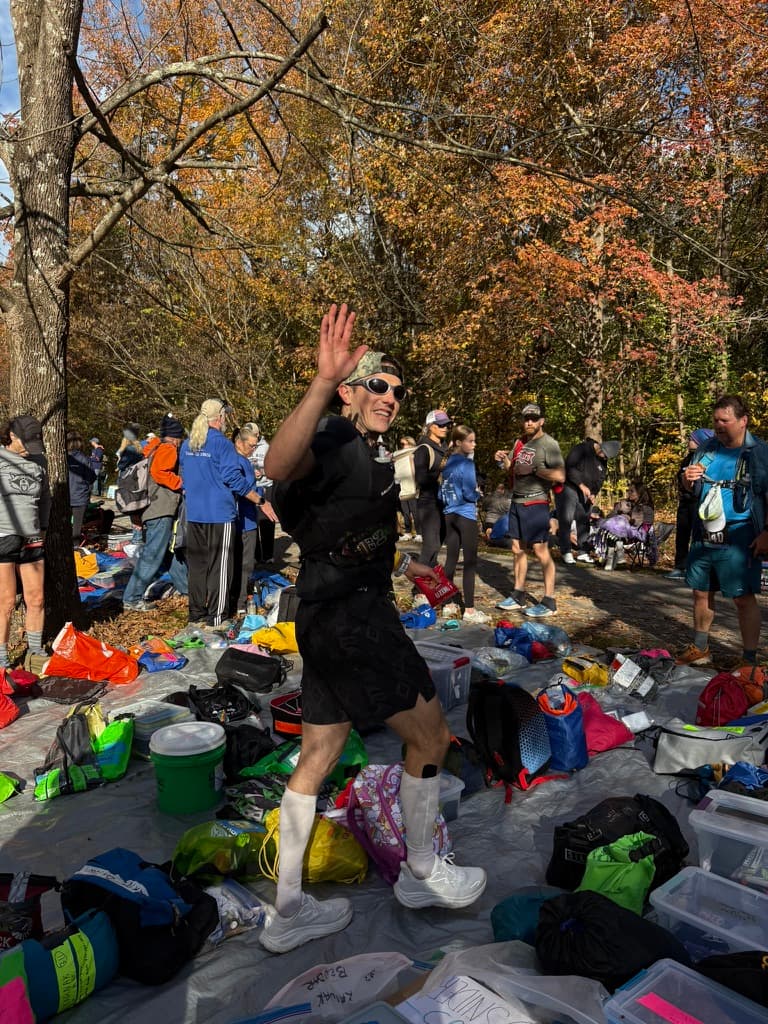
Aid Station Energy
Ultra aid stations are a whole different world from road marathon water stops. They're fully stocked mini buffets with volunteers who will make you food, fill your bottles, and cheer you on. They're also time sinks that can kill your race if you're not disciplined.
What's Typically Available
Most 100-mile aid stations stock: PB&J sandwiches, boiled potatoes with salt, chips, pretzels, bananas, oranges, watermelon, M&Ms, cookies, broth, ramen, quesadillas, cola, ginger ale, water, and electrolyte drink. Some even have grilled cheese, pizza, and soup. Check your race's website for the specific aid station menu and plan accordingly.
The 5-Minute Rule
Know what you need before you arrive. Spend no more than 3-5 minutes at any aid station. Sit down if you need to, eat something, refill bottles, and get moving. I've seen runners lose 30-45 minutes across a 100-miler just from lingering at aid stations. That chair at mile 70 is the most dangerous thing on the course. Once you sit down, it takes enormous willpower to stand back up.
Crew vs Self-Supported
If you have a crew, give them a clear list of what you want at each station: specific foods, fresh bottles, clothing changes, headlamp, etc. A good crew saves you time and mental energy. If you're running self-supported, use drop bags strategically. Pack your favorite foods, a backup headlamp, extra socks, and anything the aid station might not have. If you need help figuring out what to pack, check out my ultramarathon packing list.
Pro Tip
Electrolyte Strategy.
Electrolytes are non-negotiable in ultra running. You're sweating for 8-30+ hours. Sodium, potassium, magnesium, and calcium are leaving your body the entire time. If you don't replace them, you'll experience cramping, nausea, confusion, and eventually hyponatremia, a dangerous condition where your blood sodium drops too low.
Sodium Is King
Target 500-1000mg of sodium per hour depending on your sweat rate and conditions. Hot and humid races push you toward the higher end. Cooler conditions and lighter sweaters can stay lower. You get sodium from electrolyte drink, salt capsules (SaltStick, LMNT), salty foods at aid stations, and broth.
Signs You're Behind on Electrolytes
Cramping is the classic sign. If your calves, quads, or hamstrings start seizing, you need sodium immediately. Salt capsules and broth are the fastest fixes.
Nausea is often blamed on food, but frequently caused by low sodium. If you feel nauseous and you've been drinking plain water without electrolytes, that's likely the culprit.
Puffy hands and fingers is a sign of water retention from low sodium. Your body is holding onto water because it doesn't have enough salt to process it.
Mental fog means confusion, disorientation, and difficulty making decisions. This is serious. If you or someone around you seems confused, get electrolytes and medical attention if needed.
Pro Tip
Caffeine Strategy.
Caffeine is the most powerful legal performance enhancer available to ultra runners. It reduces perceived effort, improves alertness, and can pull you out of a dark place at mile 70 when your body is begging you to stop. But timing and dosing matter.
The Caffeine Protocol
Save it. You don't need it yet. Your body has plenty of natural energy. Using caffeine early means it won't be as effective when you really need it later.
A caffeinated gel or half a cup of cola. This is your first boost. It'll hit just as fatigue starts building and the sun may be going down.
Cola at every aid station, caffeinated gels, or caffeine pills. You're likely running through the night now. Caffeine keeps the lights on mentally.
Full cola, Mountain Dew, double-caffeine gels. You're in survival mode. The finish line is close. Caffeine is your best friend for the final push.
Pro Tip
Night Running Fuel Tips.

Night Miles: Tunnel Hill
Running through the night changes everything about your nutrition. Your body's circadian rhythm is telling you to sleep, your core temperature drops, your digestion slows, and the foods that worked at mile 30 now make you gag. This is where most 100-mile races are decided.
What Changes at Night
Sweet foods become revolting. After 12+ hours of gels and sports drink, your body will revolt against anything sweet. This is incredibly common. Pivot to savory: broth, ramen, potatoes with salt, grilled cheese, quesadillas.
Warm foods are comforting. A cup of hot broth or ramen at a night aid station is medicinal. It warms you from the inside, provides sodium, and gives you a psychological boost that no gel can match.
Caffeine becomes critical. This is when you deploy your caffeine strategy. Cola, coffee (some aid stations have it), and caffeinated gels keep you alert and moving through the darkest hours.
Smaller, more frequent bites. Instead of trying to eat a full sandwich, take 2-3 bites and keep moving. Eat a little something every 15-20 minutes rather than a lot every 45 minutes. Your sluggish nighttime stomach handles small amounts much better.
Pro Tip
Race Day Nutrition Plan.
Here is a practical, actionable nutrition plan framework for a 100-mile race. Adjust quantities based on your training experience and stomach tolerance.
Pre-Race (3 Hours Before Start)
500-800 calories of familiar, easy-to-digest carbs. Oatmeal with banana and honey, a bagel with peanut butter, or white rice with a little salt. Sip 16-20oz of electrolyte drink. Use the bathroom. Then stop eating 60-90 minutes before the gun so your stomach is settled.
During the Race
| Phase | Target Cal/Hr | Primary Fuel |
|---|---|---|
| Miles 0-25 | 250-300 | Gels, sports drink, banana, light snacks |
| Miles 25-50 | 250-350 | Mix of gels and real food: PB&J, potatoes, fruit |
| Miles 50-75 | 200-300 | Savory food: broth, ramen, quesadillas, cola |
| Miles 75-100 | 150-250 | Whatever you can keep down: cola, broth, chips, cookies |
Hydration Targets
Aim for 16-24oz of fluid per hour, adjusted for heat and humidity. In hot conditions, push toward 30oz. In cooler weather, 16oz may be sufficient. Alternate between electrolyte drink and water. If your pee is clear, you're over-hydrating (risk of hyponatremia). If it's dark yellow, drink more.
Pro Tip
What I Ate at Tunnel Hill 100.
Here's exactly what I ate and drank during Tunnel Hill 100. Not a theoretical plan. This is what I actually consumed across 100 miles of crushed limestone trail in southern Illinois.
Pre-Race: Oatmeal, banana, peanut butter, coffee
Ate at 3:30 AM. About 700 calories. Nothing fancy. Same breakfast I ate before every long run in training. A cup of coffee for the ritual more than the caffeine.
Miles 0-25: Maurten gels + Tailwind in bottles
One Maurten gel every 30 minutes, sipping Tailwind from my flask. About 280 cal/hr. Felt great. Everything was working. Also grabbed a banana at the mile 12.5 aid station.
Miles 25-50: PB&J, boiled potatoes, Coke
Started mixing in real food. Half a PB&J every aid station, a few potato pieces with salt. First Coke at mile 37. Still taking Maurten gels between stations but starting to get tired of sweet flavors.
Miles 50-70: Broth, ramen, chips, lots of Coke
Sweet foods were done. Couldn't look at another gel. Switched to broth and ramen at every aid station. Potato chips became my best friend. Coke at every stop. About 200-250 cal/hr.
Miles 70-85: Survival eating. Coke, broth, pretzels
The lowest point nutritionally. Stomach was touchy. Forced down small sips of Coke and broth. Nibbled pretzels. Maybe 150 cal/hr. Took two caffeine pills at mile 75.
Miles 85-100: Second wind. Coke, cookies, grilled cheese
Something clicked around mile 85. The sun came up. My appetite returned slightly. Had a grilled cheese at mile 87 that I still think about. Coke and cookies carried me home.
Total estimated intake: roughly 7,000-8,000 calories over the entire race. Was it perfectly optimized? No. Did I finish? Yes. The lesson: have a plan, execute it as well as you can, and adapt when your body tells you the plan needs to change.
Common Nutrition Mistakes.
Starting too fast and forgetting to eat
The adrenaline of race start suppresses hunger. By the time you realize you haven't eaten in 2 hours, you're already in a hole. Set that timer from mile 1.
Only training with gels
Gels work great for 3-4 hours. For 20+ hours, you need real food. If you've never eaten a sandwich while running, race day is not the time to try it for the first time.
Drinking only water
Plain water without electrolytes over many hours can cause hyponatremia. Always pair water intake with sodium. This is not optional. It's a safety issue.
Trying new foods on race day
That random energy bar at the mile 50 aid station looks great until it gives you violent stomach cramps for the next 10 miles. Stick to what you've trained with.
Eating too much too fast
Slamming 500 calories at an aid station because you're behind on nutrition is a recipe for vomiting. Small, frequent intake beats large infrequent meals every time.
Ignoring early signs of GI distress
A little nausea at mile 40 is a warning. Slow down, switch to liquid calories, take some ginger chews. If you ignore it, it becomes full-blown vomiting at mile 55.
No backup plan
If your primary fuel is Maurten gels and your stomach rejects them at mile 45, what's Plan B? Always have 2-3 backup fuel sources you've tested in training.
Pro Tip
That's The Guide
Now Go Fuel Your Ultra.
If this guide helped you, share it with someone who's about to toe the line at their first ultra. Follow along as I train for more ultras and Ironman California 2026.
Track Your Nutrition
Download InstaCal
The AI-powered calorie tracker I built. Snap a photo of your food and get instant macro breakdowns. Perfect for dialing in your race nutrition.
Get InstaCal